LearnFollow your chart
The parking method in cross stitch
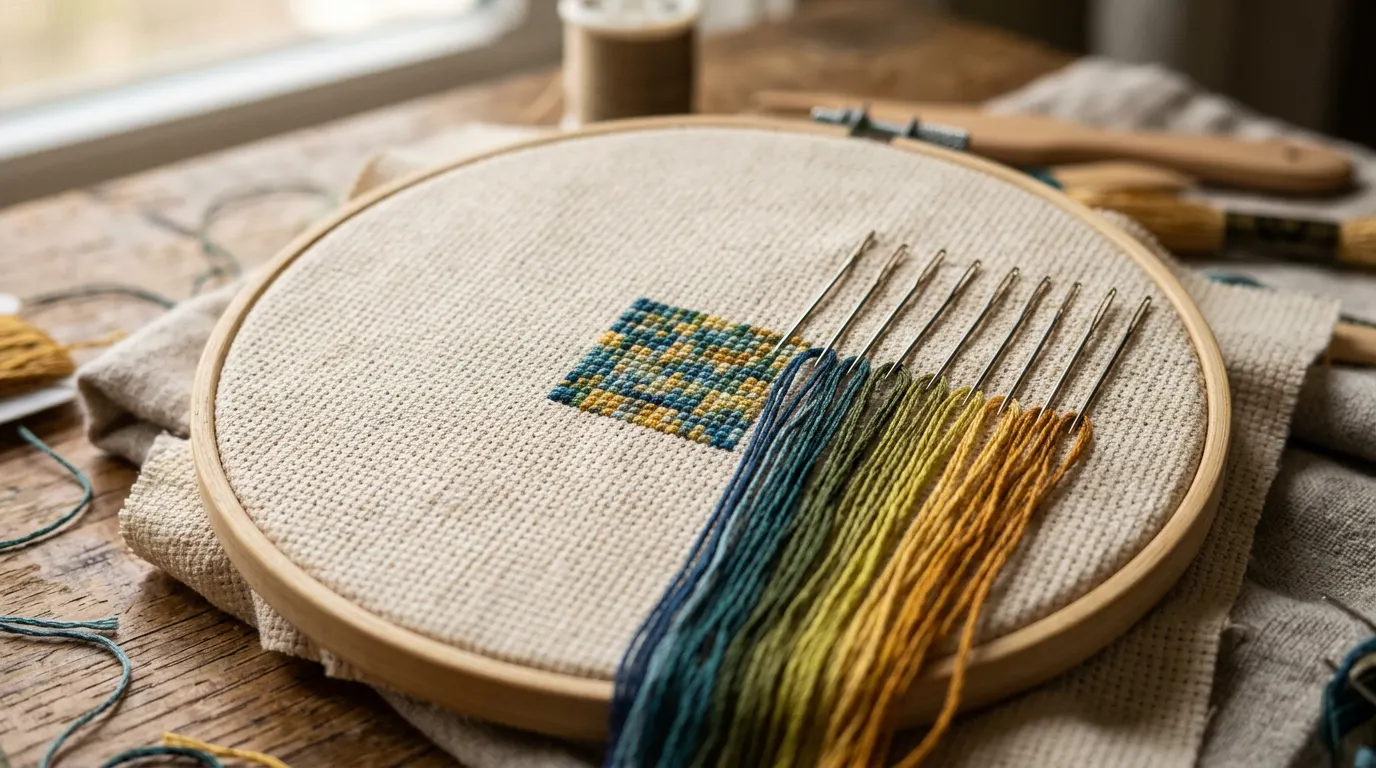
The parking method is a way of stitching one small block at a time: when a colour is finished in the block, you bring its needle up where that colour’s next stitch begins, just ahead, and leave it waiting on the front. You finish every colour in the block before moving on, so counts stay short and you end and start far fewer threads.
On this page
What parking is
Many stitchers start out stitching one colour until its area is done, then ending the thread. That works for big shapes. It falls apart on a chart where a single 10×10 block holds a dozen colours in ones and twos: you spend more time starting and ending threads than stitching.
Parking turns the order around. You work one small area at a time, usually a 10×10 block, and stitch every colour in it. When a colour is done in the block, you do not end it. You bring the needle up through the fabric where that colour is needed next, just ahead of you, and leave it there, “parked” on the front. When you reach that block, the thread is already waiting in the right hole.
When parking pays
- Confetti: single stitches of many colours scattered across an area, as in charts made from paintings or photos.
- Full coverage: every square of the fabric is stitched, so a short carry on the back ends up behind stitches, where it cannot show through.
- Many colours: dozens of shades with subtle steps between them.
For a design with large, flat areas of one colour, plain colour-by-colour stitching is often quicker. Many stitchers park only in the busy parts.
Park a 10×10 block, step by step
- Choose a starting block, often the top-left block of the page, and decide your direction: along the row of blocks, then down to the next row.
- Thread the first colour of the block. Stitch every stitch of that colour inside the block.
- Find where this colour appears next in the block you will stitch next: the one beside it, or the one below if you are at the end of a row.
- Bring the needle up in the hole where that next stitch begins. Leave the needle on the front, outside the block you are working.
- Repeat with every other colour in the block, until the block is complete.
- Move to the next block. Pick up the threads parked there, stitch them, and park each one again ahead of you.
If a colour does not appear again close by, end it and start fresh later. Parking is for short journeys.
Park forward, never back
The one rule that keeps parking tidy: always park ahead of your stitching, in the block to the side or the block below, never back into a block you have finished.
A thread parked backwards drags across the back of finished stitches. It pulls them out of shape, bulks up the back, and can show through. A thread parked forwards only travels under fabric you are about to cover.
Bring the needle up in the corner where you start that stitch, so its top leg lies the same way as every other cross.
Strict parking and cross-country parking
Strict parking (block parking) is the method above: one 10×10 block at a time, every colour finished, each thread parked into the next block. Counts stay very short and every block is finished as you leave it. The price is many needles in the fabric at once on busy charts.
Cross-country parking works in bands instead of blocks. You take one colour across a whole row of blocks, often ten rows high and a page wide, stitching it everywhere it appears in that band. Then you park it at its first stitch in the band below and move on to the next colour. You handle fewer needles at once and stitch longer runs of one colour, but you count across a wider area.
Try both on one page and keep the one that suits your chart and your hands.
Tips: needles, tangles and pages
- One needle per parked colour is simplest. Some stitchers unthread the needle and leave only the thread end parked; that saves needles but means re-threading every time.
- Keep parked threads out of the way. Pull each parked needle to the side away from the block you are stitching, or push it into the fabric outside the stitching area, so it does not catch in your stitches.
- Check the length before you park. A thread with only a few stitches left is better ended now than parked and ended later.
- Note the colour. With similar shades, mark the parked spot on your working chart, so you know which needle should be where.
- A page at a time. On a multi-page chart, finish a page, or a band of it, before moving on. At the page edge, park into the next page and mark it on that page.
Common mistakes
- Parking backwards across finished blocks.
- Parking too far. Long carries pull the fabric and show through light cloth. End the thread instead.
- The wrong corner. A needle parked in the wrong hole gives a cross with its top leg the other way, or a stitch one square off.
- Trusting a parked needle blindly. Before you stitch from it, check that it sits in the right square on the chart; every stitch you make from a misplaced needle is misplaced too.
- Stitching over parked threads. Move them clear before each block, or they get caught and tangled.
Parking in Crosstela
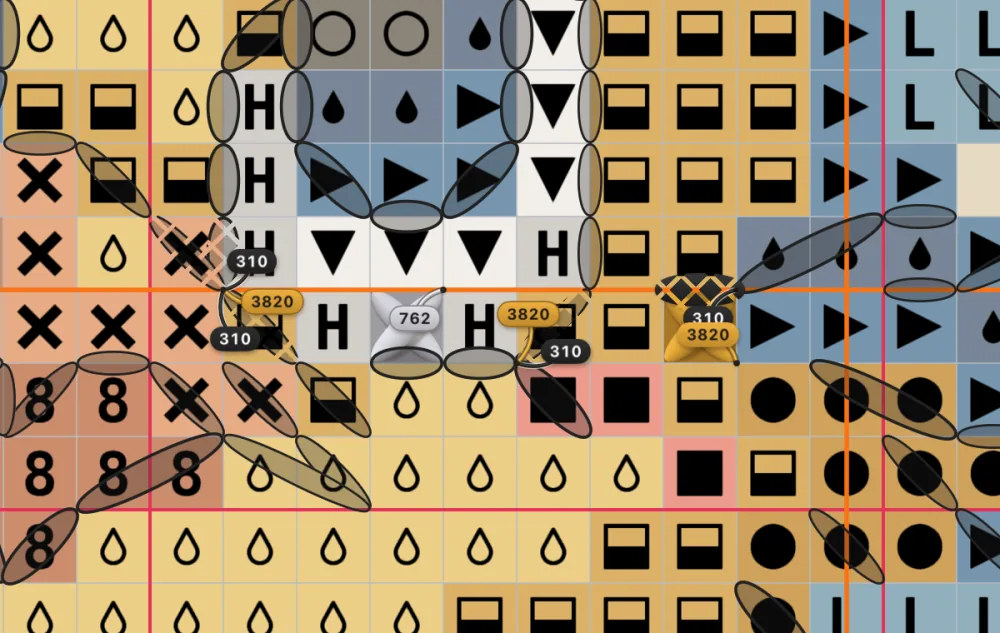
On fabric, a parked needle shows where its thread waits. Crosstela, a free pattern tracker for iPhone, iPad and Mac, lets you leave the same bookmark on the chart:
- Press and hold the square where the thread will come up next.
- On the Square tab, find Park the thread: four buttons, one for each corner.
- Tap the corner the thread comes up through.
- A small capsule in the thread’s colour, with its number, now stands in that corner.
If the square holds several threads, the menu asks Park which thread?: tap that thread’s row.
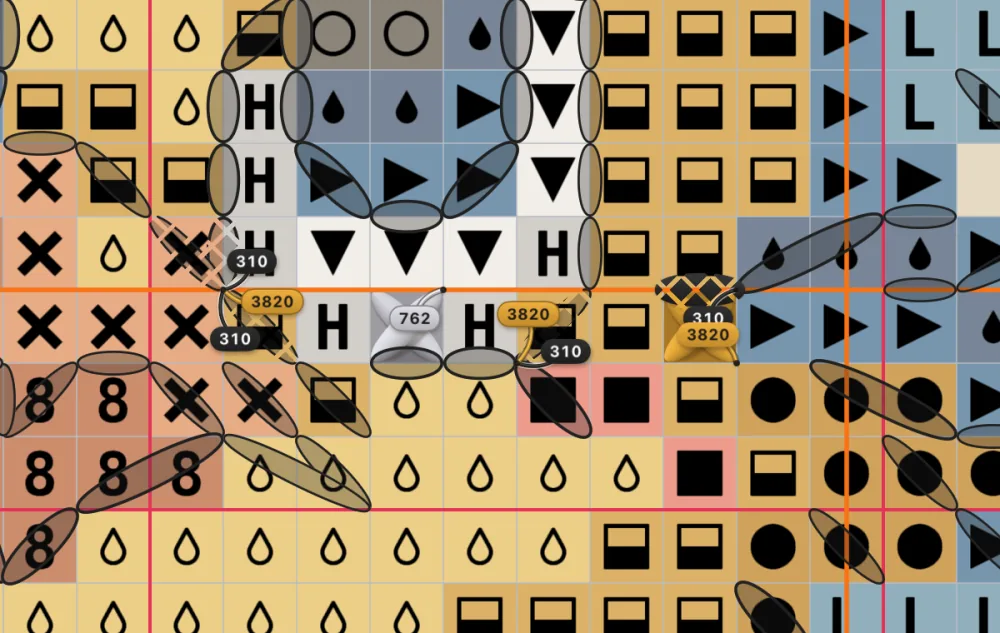
To go from one parked thread to the next, turn on Pattern › Tools › Bottom buttons › Parked threads button. While a thread is parked, Parked · N stands at the foot of the chart; each tap flies close up to the next parked thread and picks its colour. To take a thread out, press and hold the square again and tap the filled corner.
A park is a bookmark, not a mark: your progress does not change. For strict parking, frame your block as a work area: press and hold a square and, on the Block tab, tap Work here, or use Sections 10×10 and step through with ‹ and ›. Parking works inside and outside the area. See Park a thread and Work in one area.
Questions people ask
What is the parking method in cross stitch?
It is a way of stitching one small block at a time. When a colour is finished in the block, its needle is brought up where that colour is needed next, just ahead, and left waiting on the front instead of being ended.
Is parking better than cross-country stitching?
Parking pays on confetti, full-coverage and many-colour charts, because counts stay short and you end fewer threads. For large areas of one colour, stitching one colour at a time is often faster.
Which way should I park my threads?
Always forwards: into the block beside you or the block below, never back into a block you have finished. Carrying a thread backwards drags it across finished stitches on the back.
How many needles do I need for parking?
One for each colour you have parked at the same time, which depends on how busy your chart is. You can also unthread and park the thread end alone, at the cost of re-threading.
What is cross-country parking?
Instead of finishing one 10×10 block, you stitch one colour across a whole band of blocks, then park it at its first stitch in the next band. It means fewer needles at once and longer runs of one colour.